Scent as Perception:Machine Smell as a Sensory Intelligence for Image Generation
Author: Yiyi Zhang
Supervisor: Professor Mick Grierson
Degree Programme:
MSc Computing and Creative Industry (Modular)
Date of Submission: December 2025

Table of Contents
Part I
Research Context and Aims
Part II
System Design and Technical Development
Part III
Outcomes, Reflection, and Conclusion
Introduction
Research Questions
Project Description
Related Background and Theory
E-nose System Architecture
Feature Engineering & Machine
Learning Models
Development Process & Challenges
Outcomes
Reflection Question
Conclusion


Core Output:
An interactive device that transforms real-time odor signals into generative visual compositions.
Research Objective:
To explore how machine olfaction can be applied as a form of sensory intelligence in human-computer interaction (HCI) and computational creativity.
Introduction
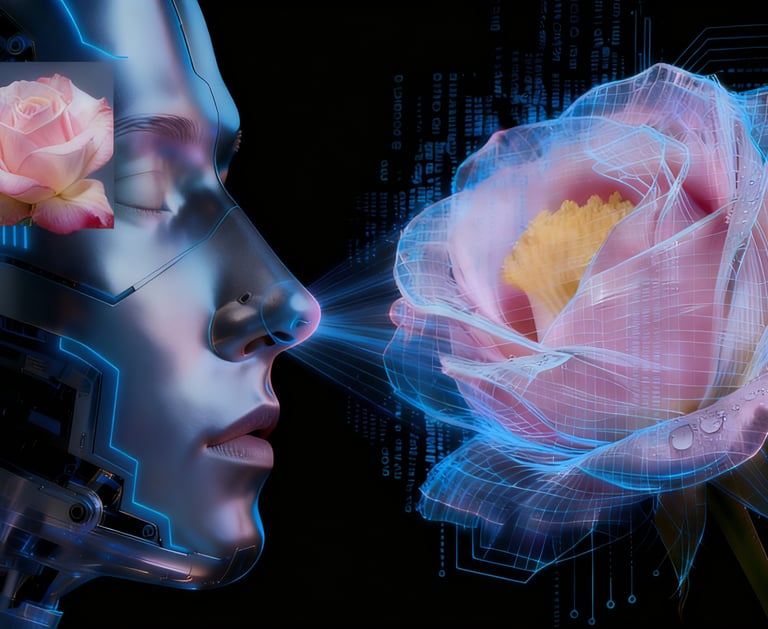
"If a machine could smell, how would it imagine what it perceives?"
Core Project Inquiry
Research Questions
Data & Translation
How can we reliably collect and classify data from an electronic nose?
How can identified scents be transformed into visual outputs (cross-modal translation)?
Experience & Art
How can scent create a more immersive, multi-sensory environment?
What new meanings emerge when scent becomes a driver of computational creativity?
End-to-End Pipline
Hardware Layer
The E-Nose
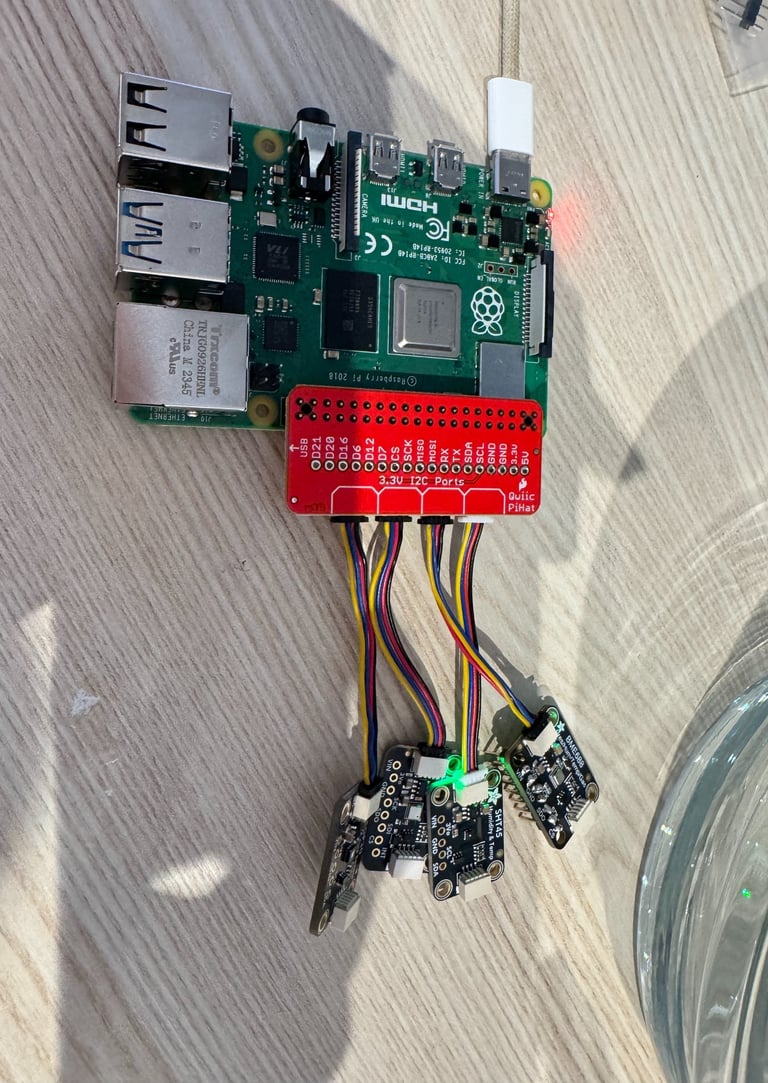
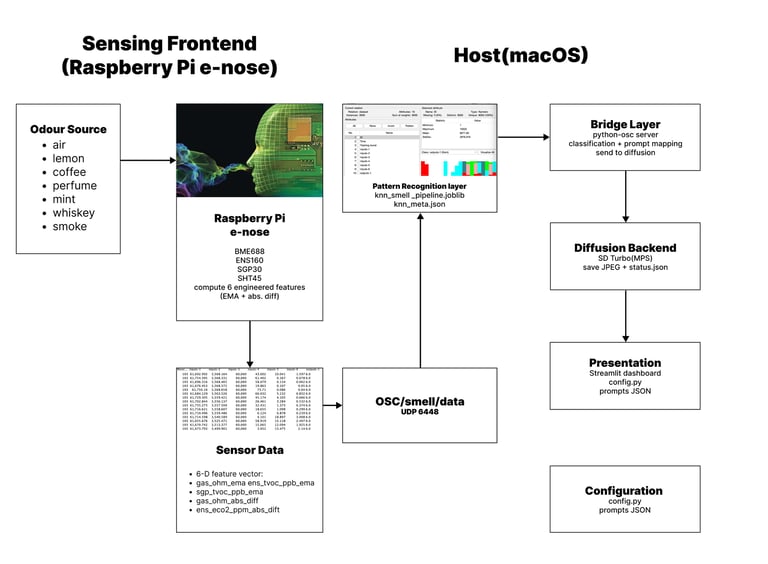
Raspberry Pi + BME688/ENS160/SGP30/SHT45 sensors detecting gas composition.
Classification
KNN model classifying 7 unique scent categories from raw data.
Visual Output
Stable Diffusion Turbo evolving artwork based on scent.
ML Layer
Generative Layer
Project Description


The Role of Smell in Human-Computer Interaction (HCI)
Current Status:
olfaction remains largely unexplored.
Transformation:
The development of machine olfaction and low-cost gas sensors.
Creative Basis: This project continues my previous installation, Unfading Fragrance, further pushing "odor itself" to the core of the system.
Related Background and Theories
E-nose System Architecture
Hardware System:
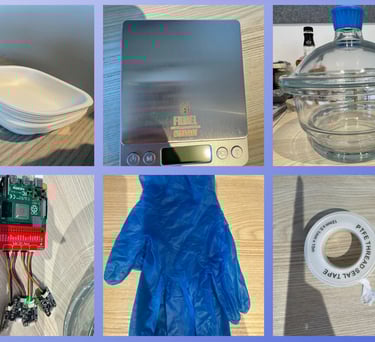
The Raspberry Pi connects to the following sensors:
BME688: Gas resistance and environmental data
ENS160: TVOC and eCO₂
SGP30: TVOC and eCO₂
SHT45: For precise temperature and humidity compensation
Controlled Sampling Chamber Design:
Ensures stable temperature and humidity, consistent odor concentration, and avoids contamination and cross-diffusion.
Experimental Tools:
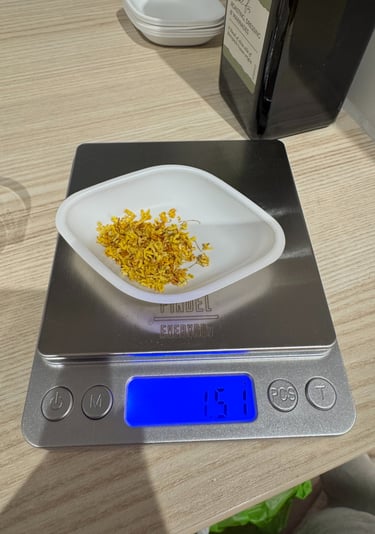
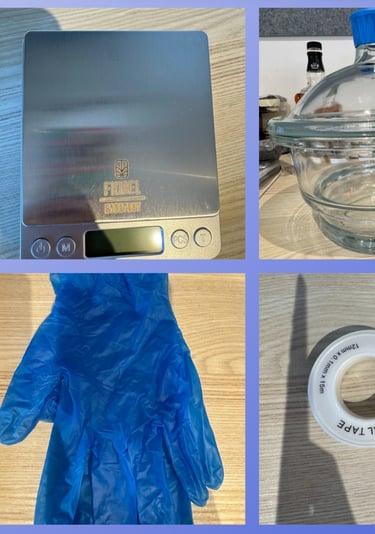
Uses labeled beakers, samples, activated carbon (for baseline recovery), and strict operating procedures.
Feature Engineering & Machine Learning Models
Feature Pipeline
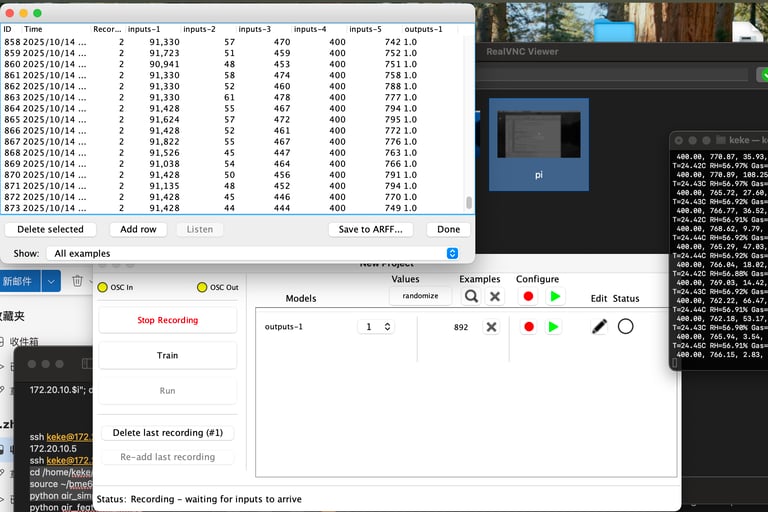
Raw sensor data transformed into 6 engineered features:
• 3x SoftEMA: To smooth signal fluctuations.
• 3x Absolute Differences: To capture short-term dynamic changes.
Result: Improved separability between 7 scent categories.
Model Selection: KNN
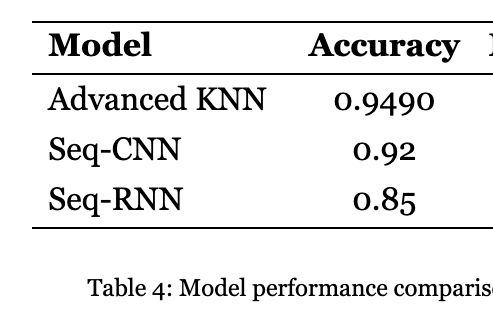
Selected K-Nearest Neighbors after testing against CNNs/RNNs.
• Accuracy: ~ 94% (5-fold cross-validation).
• Speed: Low latency for real-time interaction.
• Simplicity: Interpretable distances.
Challenges
Environmental Instability(Humidity/Temp drift)
Inconsistent Concentration
Sensor Saturation(Alcohol-based scents)
Diffusion Model Latency(20–100 seconds)
Development Process & Challenges
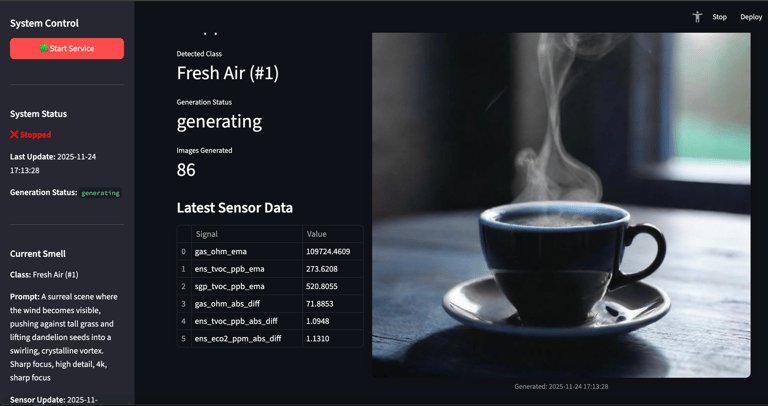
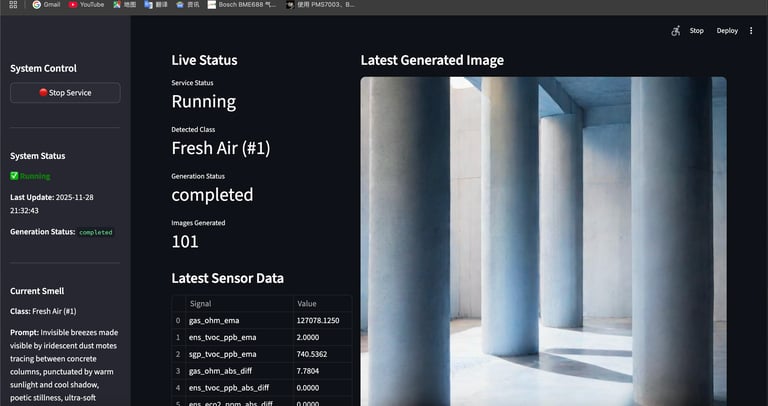
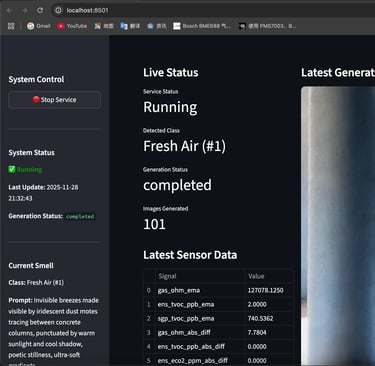
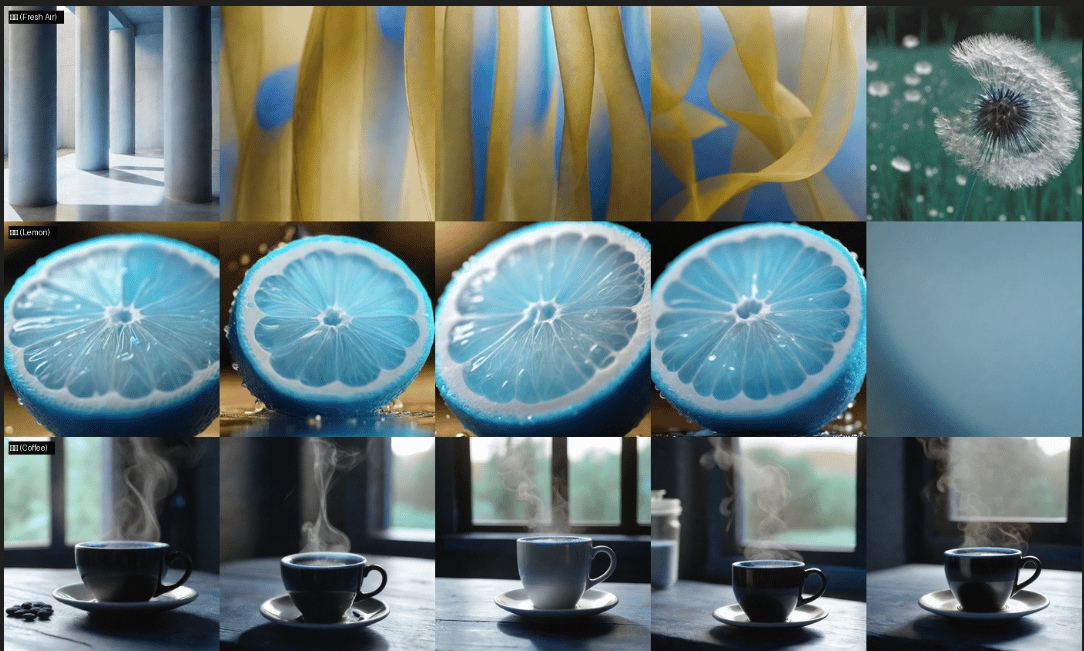
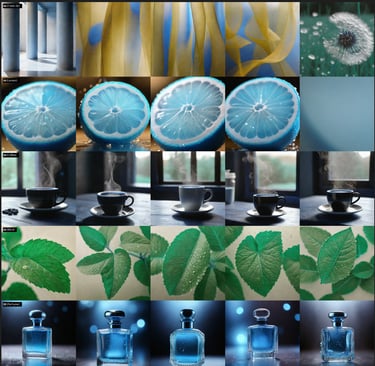
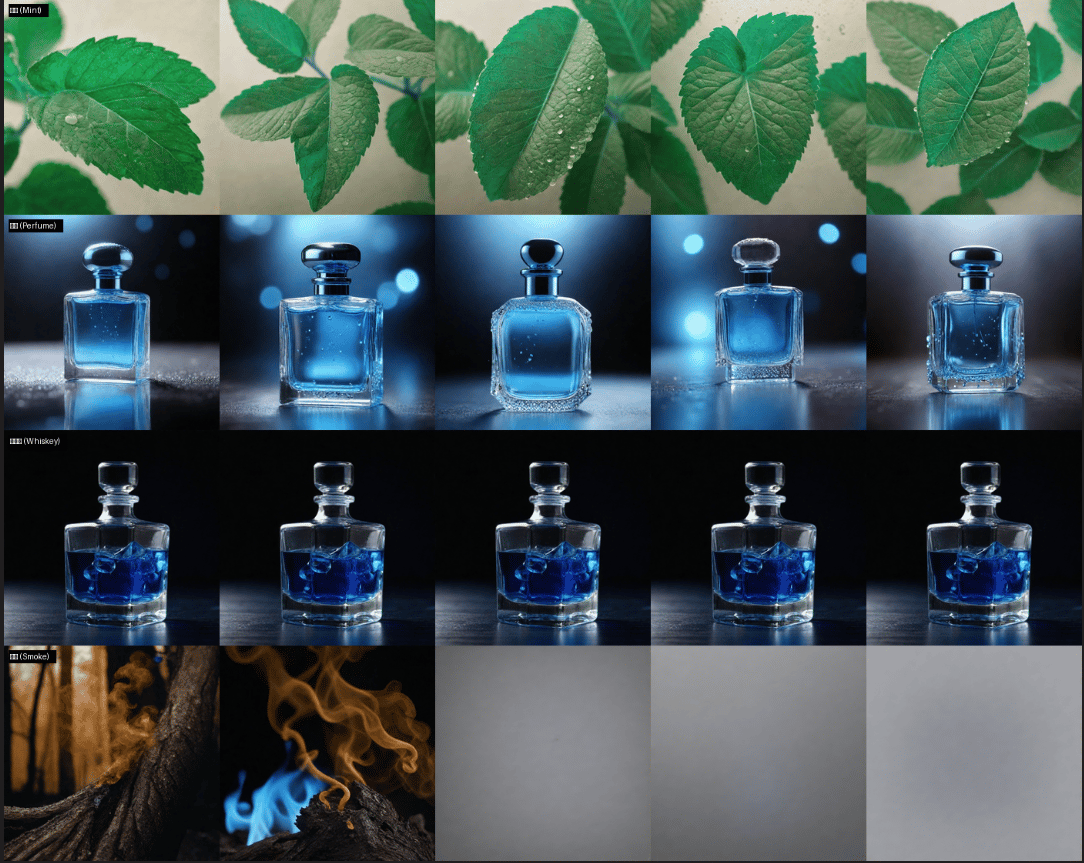
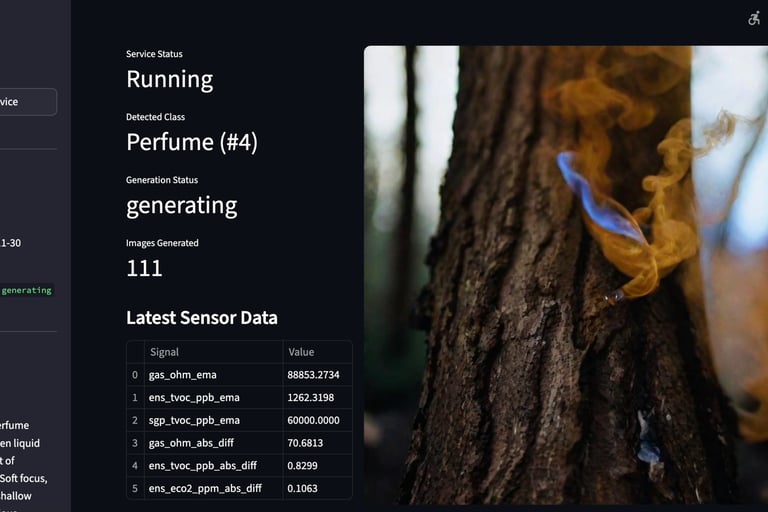
The system successfully achieved stable responses across 7 scent categories.
Cross-Modal Translation: Turning olfactory data into coherent visual generative art.
Contribution: Demonstrating how low-cost olfactory sensing can integrate into Generative AI. This project expands the design space for multi-sensory computing and offers methodological insights for future olfactory-driven creative systems.
Outcome
Generate presentation



Reflection Question
Why KNN?
The Methodological Choice
Why choose a simple algorithm like KNN over complex Deep Learning models?
My project shows that smell can be used as a meaningful input for generative AI.
Machine olfaction enables new forms of multi-sensory creativity.
The system demonstrates how computational tools can reinterpret the fleeting nature of smell into visual forms.
These visual outputs allow audiences to engage with and reflect on olfactory experiences in new ways.